Toilet Overflow Cleanup: Step by Step
Quick answer: Stop the flow by closing the supply valve behind the toilet. Put on gloves, soak up the water, then clean every surface with detergent before disinfecting it. Overflow that contained waste soaks into carpet, pad and drywall for good, so those usually have to be removed.
Stop the water
- Close the supply valve. It is on the wall or floor behind the toilet, near the base. Turn it clockwise until it stops.
- If the valve won’t turn, use the tank. Lift the tank lid and push the rubber flapper down onto its seat, or lift the float so the fill valve shuts off.
- Stop flushing. Don’t flush again until the clog is cleared, and if more than one drain is backing up, stop using all sinks, showers and the washer.
When a basement shower, floor drain or several fixtures back up at once, the problem is in the main sewer line rather than the toilet. A plunger won’t fix that; a plumber needs to clear the line.
Clean overflow or dirty overflow?
| What overflowed | How it is treated |
|---|---|
| Water from the tank or a broken fill valve | Clean water. Dry it like any small leak. |
| Bowl water with no waste, cleaned up quickly | Lightly contaminated. Clean, then disinfect hard surfaces. |
| Bowl water with urine or feces | Contaminated. Remove soaked porous materials; clean and disinfect everything else. |
| Backup from the sewer line | Sewage. Keep children and pets out; everything it touched needs full cleanup. |
Overflow water left standing gets worse with time. Even water that started out clean picks up bacteria from the floor and grows them in a warm bathroom.
Cleanup, step by step
- Protect yourself. Wear waterproof gloves and old shoes or boots. Add eye protection if you will be scrubbing near your face. Open a window and run the exhaust fan.
- Remove the water. Soak it up with old towels or a wet-dry vacuum and bag the towels for disposal or a hot wash. Work from the edges toward the toilet.
- Clean before you disinfect. Scrub the floor, the base of the toilet, the tub side and the walls with hot water and detergent. Disinfectants don’t work well on dirty surfaces.
- Disinfect. Use a household disinfectant or a bleach solution mixed as the label directs, and leave it wet for the contact time the label gives. Never mix bleach with ammonia or other cleaners.
- Dry the room. Run a fan and keep the door open. Pull the baseboard if water ran under it.
- Clean up after yourself. Wash gloves before taking them off, wash work clothes separately in hot water, and scrub your hands with soap for at least 20 seconds.
Check the floor and the room below
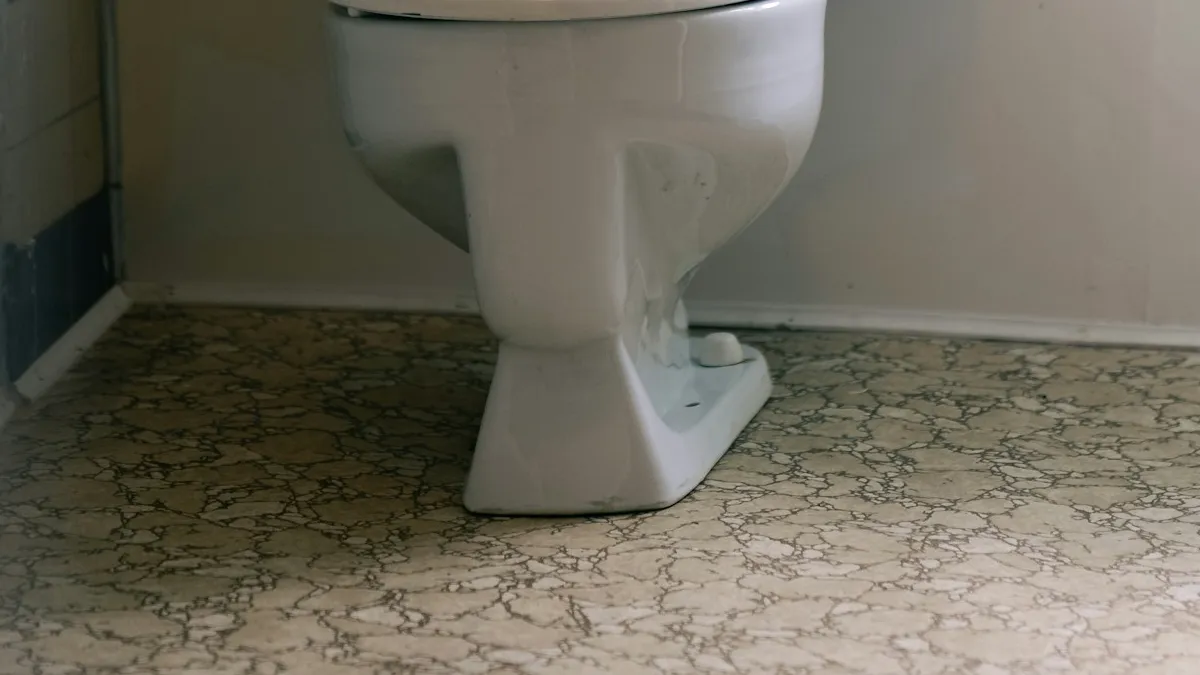
Toilet overflow runs under the base of the toilet, under vinyl and tile edges and along the subfloor. In a second-floor bathroom it can come through the ceiling of the room below hours later. Look for a soft spot around the toilet base, a stain on the ceiling under the bathroom, or a musty smell over the next few days. If the ceiling below is wet or stained, follow the steps in ceiling leaking or stained? what to do.
When it needs a professional
A single overflow of clean or lightly dirty water onto tile, caught right away, is usually a homeowner job. Contaminated water is a different matter, and professional sewage cleanup makes sense when:
- Water with waste reached carpet, a vanity or drywall
- It came through the ceiling below or soaked the subfloor
- Several drains backed up at once
- Someone in the home is elderly, pregnant or has a weak immune system
Common questions
Water from the tank is clean. Water from the bowl, especially with waste, can carry bacteria and viruses. Wear gloves, clean and disinfect, and keep children and pets away until it is done.
If only clean tank water reached it and it was dried within a day, often yes. If the water had waste in it, carpet and pad are usually thrown out because they can't be reliably disinfected.
A clog in the toilet or its drain line is the usual cause. If several fixtures back up at once, the main sewer line is blocked, often by roots, grease or wipes, and needs a plumber.
Sudden overflow from a fixture inside the house is often covered. A backup from the sewer line usually needs a water backup endorsement. Check your policy and photograph the damage first.
Follow the contact time printed on the product label. Many disinfectants need the surface to stay wet for several minutes to work.