Ceiling Leaking or Stained? What to Do
Quick answer: If water is dripping or the ceiling is sagging, switch off the lights in that room, move things out from under it and catch the water. A brown stain means water reached the drywall at some point. Find and fix the source, make sure the ceiling and insulation above are completely dry, then seal the stain with a stain-blocking primer before painting.
If it is dripping or sagging now
- Kill the power to that ceiling. Turn off the breaker for any light fixture or fan in the wet area. Water in a fixture box is a shock and fire hazard.
- Clear the room. Move furniture, electronics and rugs out from under the leak, and cover what can’t be moved with plastic.
- Drain a bulge. A ceiling bubble full of water can give way. Put a bucket underneath and pierce the lowest point with a screwdriver so the water drains in one place. Stand to the side, not directly under it.
- Stop the source if you can. If there is a bathroom or pipe above, shut off the water at the main. If it is raining, the roof is the likely source.
- Photograph it. Take pictures of the ceiling, the stain size and anything damaged, before and after you drain it.
Where the water is coming from
Water travels along rafters, pipes and the top of the drywall before it shows, so a stain is often a few feet from the actual leak. Where the stain is and when it appears point to the source.
| Source | Clues |
|---|---|
| Roof or flashing | Top-floor ceiling, appears or grows after rain, often near a chimney, vent pipe or valley |
| Bathroom above | Under a tub, shower or toilet; grows after showers or flushing |
| Supply or drain pipe | Steady drip or a growing stain regardless of weather; see what to do when a pipe bursts if it is gushing |
| AC unit in the attic | Summer, near the air handler; a clogged condensate line or rusted drain pan |
| Condensation | Small spots near exterior walls or ducts, worse in cold or very humid weather |
Many homes in the Upstate have the air handler in the attic. In a humid Spartanburg summer it can produce gallons of condensate a day, and a clogged drain line overflows the pan straight onto the ceiling below.
Old stain or active leak?
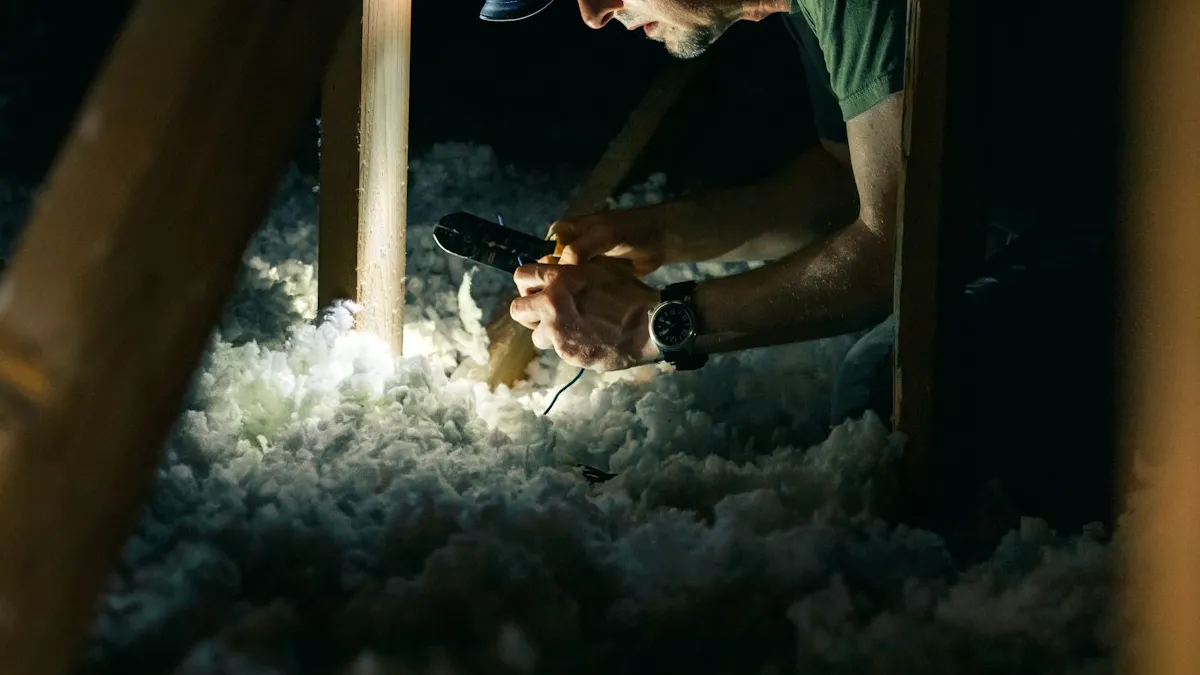
Trace the edge of the stain lightly in pencil and check it after the next rain or a few days of normal use. If it grows past the line, the leak is still active. Press gently near the stain: drywall that feels soft or crumbly is still wet or already damaged. If you can get into the attic, look at the insulation and wood above the spot with a flashlight. Wet, matted or darkened insulation means water is still getting in.
Fixing the stain
Fix the leak first and dry everything completely. Painting over a damp stain traps moisture and the stain bleeds back through. Once the drywall is dry and firm:
- Seal it. Prime the stain with a stain-blocking primer. Ordinary ceiling paint won’t hold water stains back.
- Paint the whole ceiling plane if you can. Patches of fresh white paint on an older ceiling stand out.
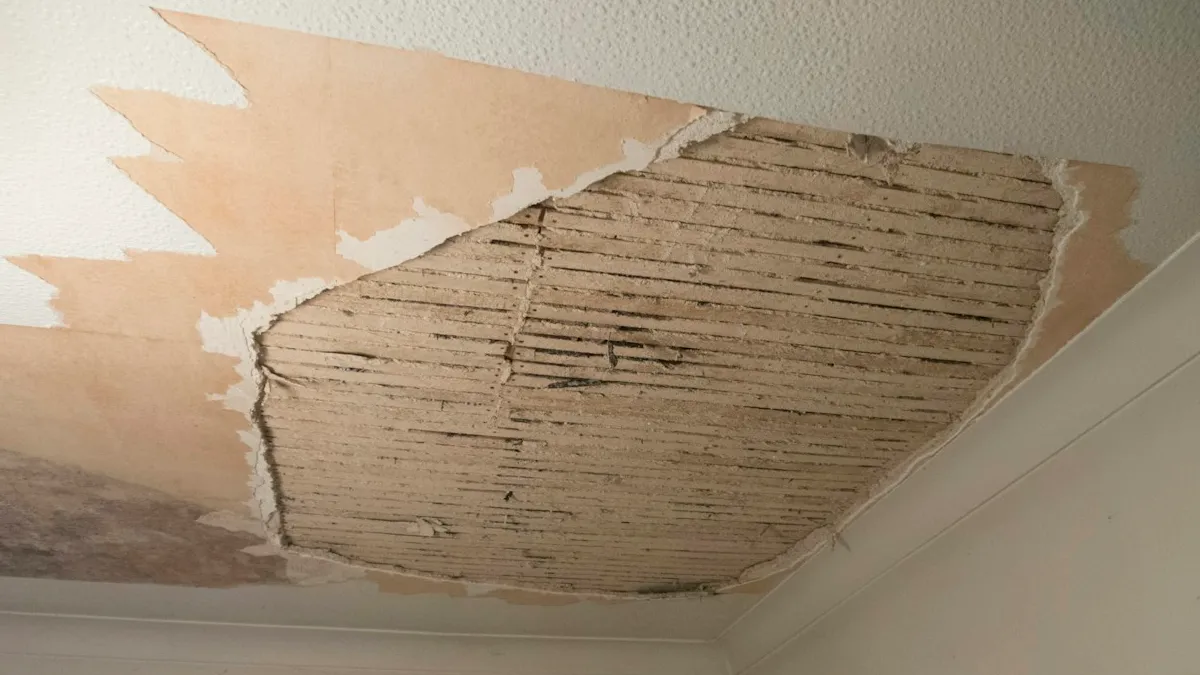
- Replace damaged drywall. Drywall that sagged, crumbled or stayed wet for more than a couple of days should be cut out and replaced, along with the wet insulation above it.
When it needs a professional
A small, dry, old stain from a leak that has been fixed is a painting job. Call a roofer or plumber for the source, and a water damage restoration company for the ceiling and what is above it when:
- The ceiling sagged, cracked or came down
- Insulation above it is soaked
- Water reached the walls or floor below
- The stain keeps coming back after the leak was fixed
Dark spots around the stain or a musty smell in the room can mean mold has started on the back of the drywall or in the insulation. A mold inspection will show how far it has spread before anything is opened up.
Common questions
A dry, old stain isn't. A stain that is wet, growing, sagging or dripping is, because the drywall can collapse and water near light fixtures is a shock hazard.
Only after the leak is fixed and the drywall is completely dry. Use a stain-blocking primer first; plain paint lets the stain bleed through.
A lightly wet ceiling with good airflow can dry in a few days. A ceiling with soaked insulation above it won't dry until the insulation is removed.
Wind-driven rain gets under shingles and around flashing at chimneys, vents and skylights that stay dry in light rain. A roofer can find the entry point, which is often uphill from the stain.
Sudden damage, such as a pipe that burst or a storm that opened the roof, is usually covered. Damage from a slow leak or a worn-out roof is often excluded. Photograph the damage and report it promptly.