Water Heater Leaking: What to Do Right Now
Quick answer: Close the cold-water valve on the pipe above the tank, then turn the heater off at the breaker (electric) or set the gas valve to “off” or “pilot”. Mop up and find where the water is coming from. A leak from a fitting can often be fixed; a leak from the tank itself means the heater has to be replaced.
Stop the leak in four steps
- Turn off the energy. For an electric heater, switch off its double breaker in the panel. For gas, turn the control knob to “off” or “pilot”. Don’t touch the panel or wiring if you are standing in water.
- Close the cold supply. The valve is on the cold-water pipe going into the top of the tank. Turn a wheel handle clockwise, or a lever a quarter turn. If it won’t close, shut off the main water valve to the house.
- Mind the heat. Water in the tank and the pipes can be hot enough to scald. Wear gloves and let it cool before draining or working on fittings.
- Contain the water. Mop or vacuum up the puddle and set towels or a pan around the base. Move boxes and anything stored against the tank.
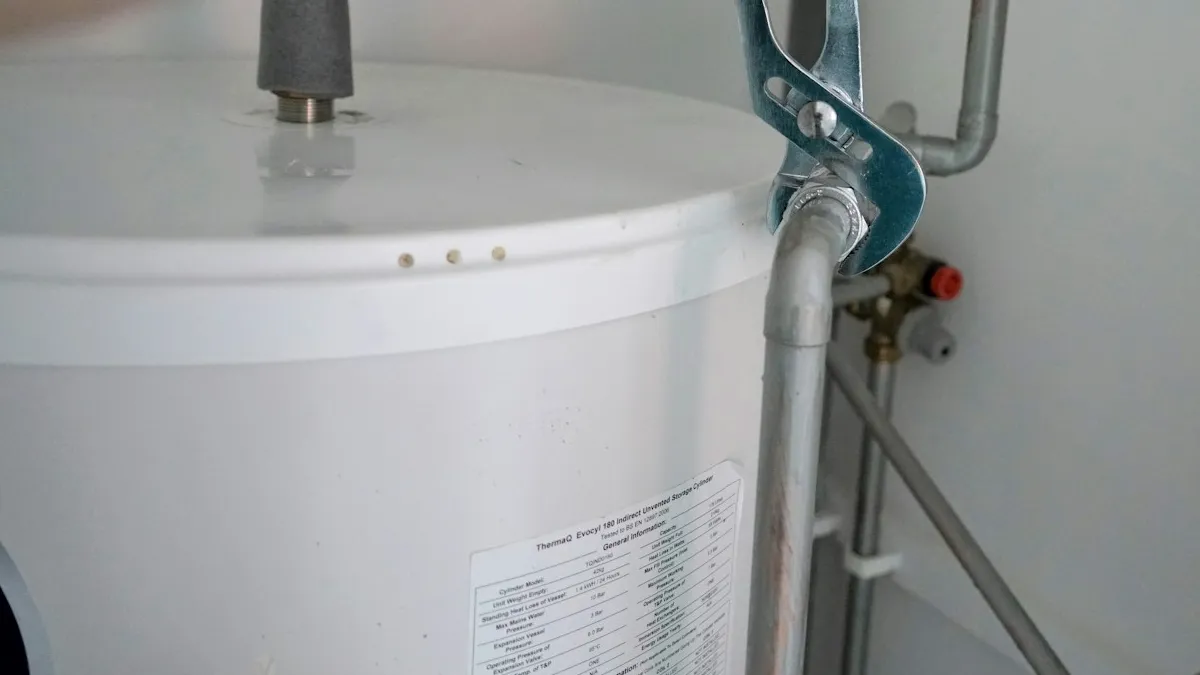
Where is it leaking from?
Dry the tank and the floor, then watch for a few minutes with a flashlight. Water runs down the outside of the tank, so a puddle at the base doesn’t always mean the bottom is leaking.
| Leak point | Likely cause | Usual fix |
|---|---|---|
| Pipe connections on top | Loose or corroded fittings, a worn supply connector | Tighten or replace the fitting |
| Temperature and pressure relief valve (side, with a pipe running down) | Water too hot, pressure too high, or a worn valve | Have the pressure and thermostat checked; replace the valve if it is faulty |
| Drain valve near the bottom | Valve not fully closed, or a worn washer | Close it snugly or replace the valve |
| Condensation on a gas heater | Cold water entering a warm tank, often in winter | Usually stops once the tank heats up |
| Bottom or seams of the tank | The inner tank has rusted through | Replace the water heater |
The relief valve is a safety device. It opens to let out water when temperature or pressure in the tank gets too high. Never cap or plug it, even if it is dripping. The valve should be tested once a year to make sure it still works.
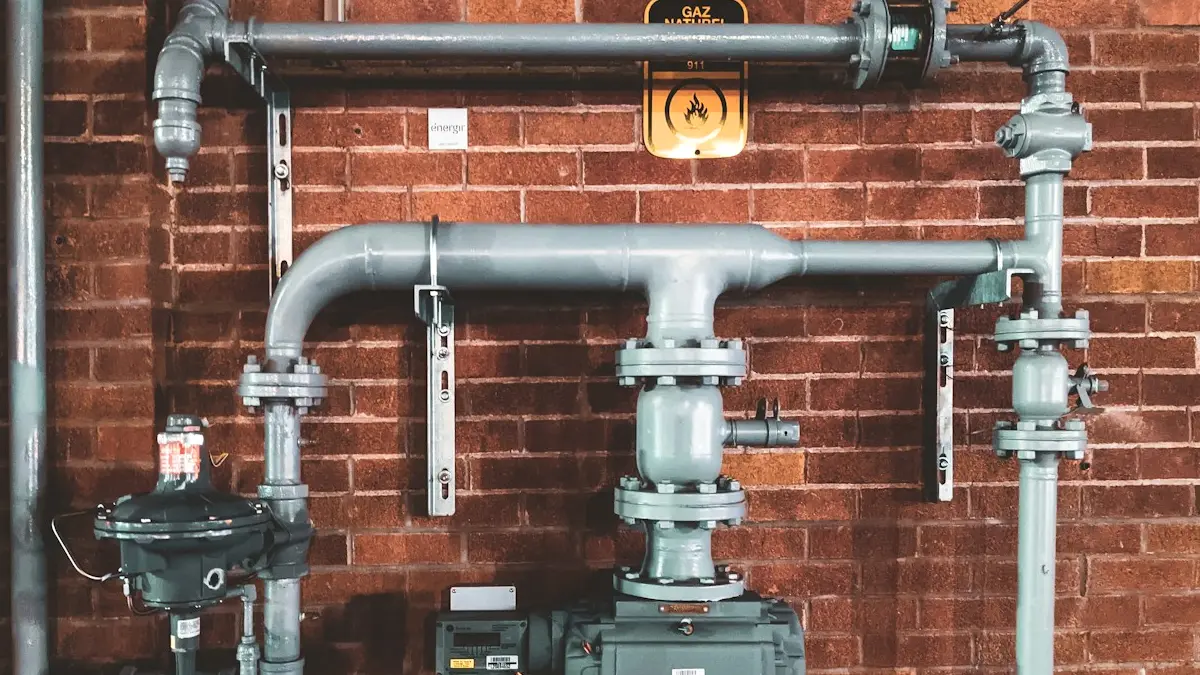
Draining the tank
If the tank itself is leaking, draining it stops the leak and gets it ready for removal. With the energy and the cold supply off, attach a garden hose to the drain valve. Run it to a floor drain or outdoors, well away from the house. Open a hot tap somewhere in the house to let air in, then open the drain valve. A typical tank holds 40 to 50 gallons, so it takes a while.
Drain valves that haven’t been opened in years can be stiff or leak once opened. If you are unsure, leave it closed and let a plumber drain it.
Protecting the floor and walls
Water heaters sit in garages, closets, basements and sometimes crawl spaces. A slow leak in a closet can soak the subfloor, the bottom of the drywall and the carpet in the next room before anyone sees it. Pull back carpet near the closet, check the baseboards for swelling and run a fan. In a basement, a tank failure can spread water quickly; the steps in what to do when your basement floods apply.
When it needs a professional
A plumber handles repairs to the heater and its fittings. Licensed installation matters for gas heaters and venting. If the leak reached floors, walls or the room below, the cleanup is a water damage restoration job, especially when:
- The tank failed and dumped its contents
- Water soaked carpet, subfloor or drywall
- The leak went unnoticed for days in a closet or attic
- There is a musty smell near the heater
Common questions
The water itself is mostly a damage risk. The real hazards are scalding water, water near electrical connections, and a relief valve that keeps opening, which can mean dangerous pressure or temperature. Turn off the energy and the supply, and have a plumber check it.
Not if the tank itself is leaking. If the leak is a loose fitting on top, a plumber can often fix it the same day and the heater can go back into use.
Either water is running down from a fitting or relief valve above, the drain valve is leaking, or the tank has rusted through. Dry everything and watch where fresh water appears.
Policies usually cover sudden water damage to the house from a failed tank, but not the cost of the water heater itself. Damage from a slow leak that went on for a long time is often excluded.
Rust-colored hot water, rust around the base or fittings, rumbling or popping sounds and water at the bottom of the tank all point to the end of its life. A leak from the tank itself can't be repaired.